Your Creator Program Isn't Underperforming. Your Casting Is.
Safe creator casting is costing brands attention. Here's why adjacent creator strategy — not category fit — is driving higher-performing programs in 2026.


For years, brand creator strategy followed clean category lines — beauty with beauty creators, tech with tech reviewers, sports with athletes. It made sense. It felt controlled. It checked the relevance box.
But in today's saturated feeds, safe casting rarely earns disproportionate attention.
What we're seeing across higher-performing programs is a consistent pattern: growth often comes from adjacent creator casting — creators just outside the category, but deeply inside the audience's world. Not random picks. Not novelty. Intentional adjacency.
When the casting is right, these creators don't just extend reach — they add interpretation, cultural context, and a pattern break that makes the content feel fresh instead of formulaic. That's often the difference between being seen and being scrolled past.
Why Brands Are Expanding Beyond "Category Fit"
For years, creator selection followed a predictable logic: beauty brands worked with beauty creators, tech brands with tech reviewers, sports brands with athletes.
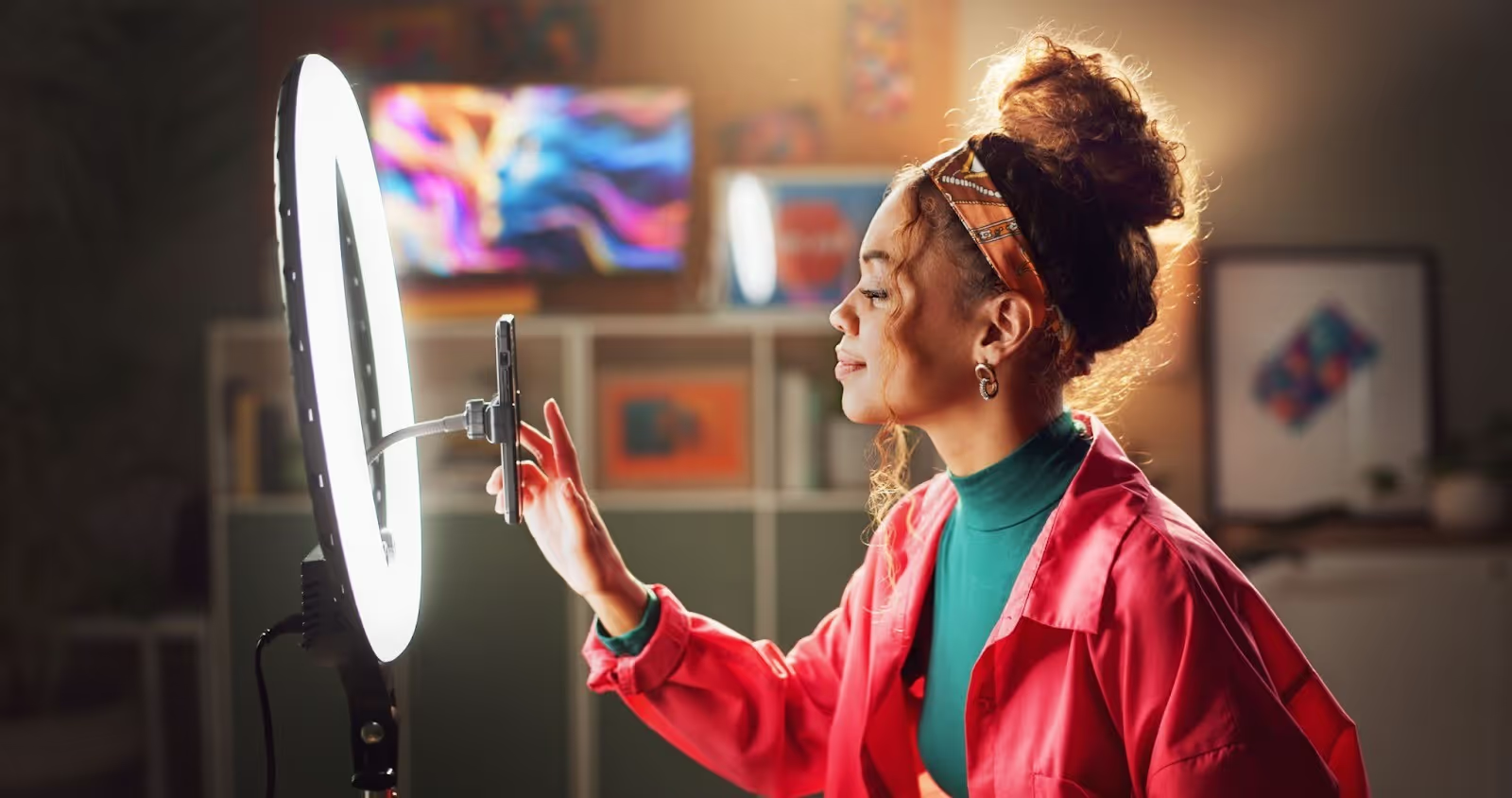
That approach still has value — but it's no longer enough on its own.
What we're seeing now is a shift toward adjacent creators: creators who may not sit directly inside a category, but who bring cultural interpretation, freshness, and context that category-native creators sometimes can't.
This isn't about abandoning relevance or niche. It's about expanding it.
When a beauty brand partners with a tech creator, or a sports league works with creators outside traditional athletics, the result often feels more human and more surprising. It stops the scroll because it doesn't look like what audiences expect.
Expectation fatigue is real. Familiar formulas are losing their impact. What once felt reliable now feels predictable.
The NFL and the Rise of Cultural Interpretation
Recent NFL creator partnerships highlight this shift clearly. The league isn't only investing in sports creators — it's investing in creators who can translate football into culture, humor, fashion, and conversation.

The goal isn't just reach. It's interpretation.
Adjacent creators help brands show up in ways that feel lived-in rather than promotional. They add narrative layers that internal teams and category creators alone can't always deliver.
That's where trust compounds.
Why Adjacent Creators Perform Differently
Adjacent creators tend to bring three consistent advantages:
New audiences without forced expansion. Their communities already trust them — and that trust transfers when the partnership feels natural.
Unexpected creative. A familiar product framed through an unfamiliar lens feels fresh without needing to be loud.
Cultural participation over advertising. This matters more as audiences grow increasingly resistant to overt selling.
None of this works without structure. Adjacent partnerships still require clear briefs, defined usage, aligned expectations, and strong operational support. The creativity works because the foundation is solid.
What This Means for Creator Strategy in 2026
If your creator strategy only looks inward at your category, you're likely limiting both reach and relevance.

The brands pulling ahead are asking better questions:
• Who already speaks to our audience, even if they're not labeled as "our category"?
• Who can translate our product into culture, not just features?
• Where does adjacency add clarity instead of confusion?
This isn't a shortcut. It requires more discernment, not less — agencies and teams who understand creator ecosystems well enough to spot alignment beyond surface-level metrics.
That's where credibility shows up.
Other Signals Worth Paying Attention To
A few industry moves and platform shifts worth watching as you plan for the year ahead:
TikTok Uncertainty and Platform Migration
Ongoing changes around TikTok ownership and governance have led to a noticeable rise in users experimenting with alternative platforms. This fragmentation reinforces the need for creator strategies that are portable and not platform-dependent.
Creators and AI Rights Conversations
High-profile deals involving creator likeness and AI usage are accelerating conversations around ownership, licensing, and long-term value. This will continue to shape contracts and partnership structures in the coming year.
Creators Moving Into Long-Form and Entertainment
From Netflix collaborations to premium subscription models, creators are expanding beyond social-first distribution. Influence is stretching across platforms, formats, and revenue models.
Paid Social and Subscription Shifts
Changes to premium subscription offerings across major platforms signal a continued push toward monetization that doesn't rely solely on advertising.
The Bottom Line
Adjacent creator casting isn't a trend — it's a signal of a more mature, thoughtful creator economy.
As the space evolves, credibility will belong to the brands and agencies that can move beyond obvious choices, design partnerships with intention, and execute with discipline.
The future of influence isn't about staying in your lane. It's about knowing when and how to expand it.
If you're thinking about how to evolve your creator strategy this year, start by looking one step to the side.
Want to see what adjacent casting looks like in practice?
Intuition Media Group helps brands identify, qualify, and activate creator partnerships that go beyond category fit — built on the frameworks that have driven 750+ campaigns across 16 years.
Read more post




.png)
%20(1).png)