Nostalgia Marketing Isn’t Really About Nostalgia Anymore.
How Columbia and J.Crew are rethinking nostalgia marketing by inviting Gen Z to experience, reinterpret and make brand heritage their own.


I’ve been thinking about two very different campaigns from Columbia Sportswear and J.Crew, and what they might tell us about where nostalgia marketing is heading.
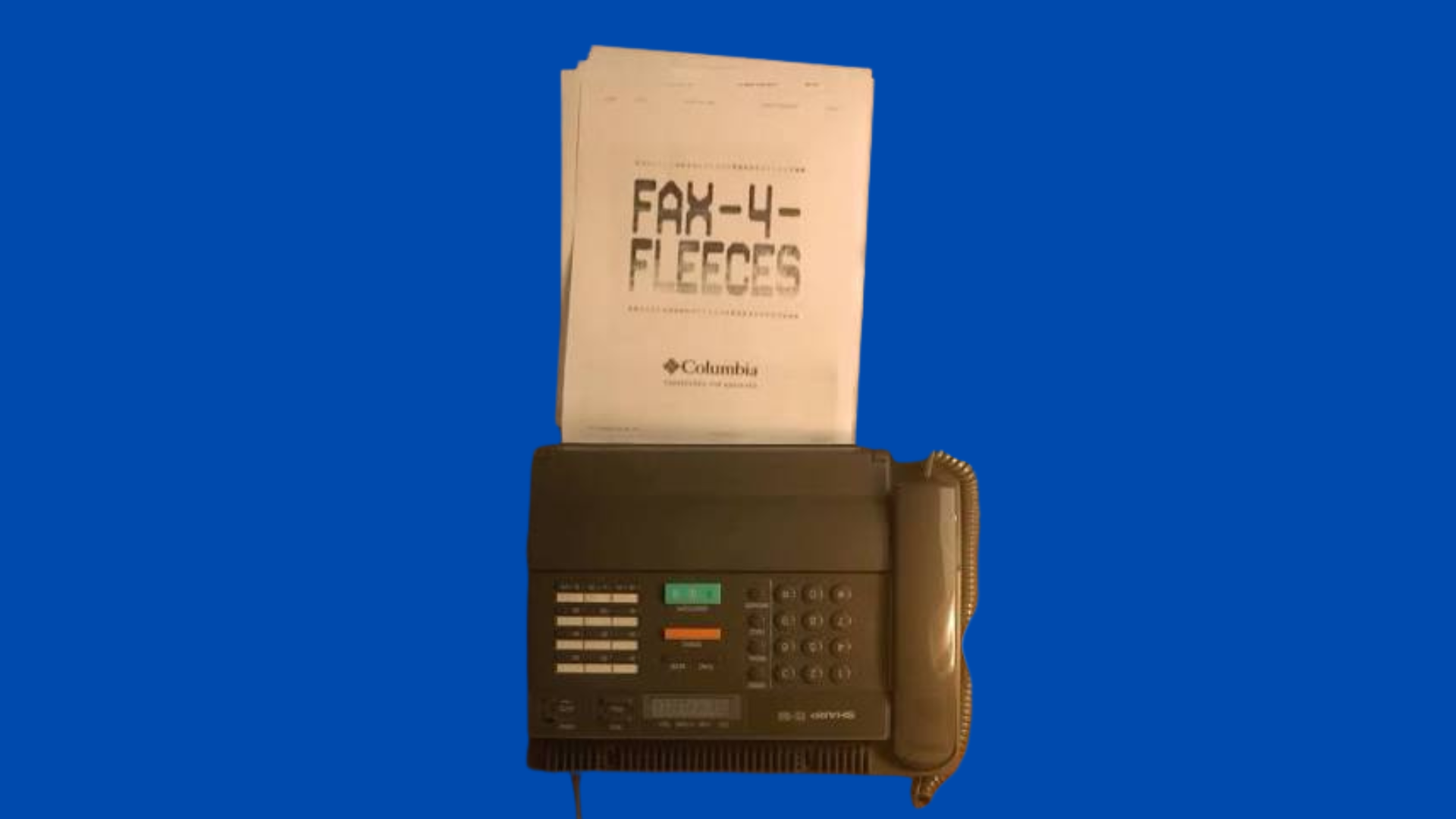
To celebrate the 35th anniversary of its iconic 1991 Helvetia Fleece, Columbia is giving away fleeces with a catch: you have to enter by fax. There’s no digital entry form and no QR code. You actually have to find a fax machine, figure out how to use it and send in your entry.
Brilliant, in my opinion.
I watched creator Ken Eurich attempt it and was in stitches. She’s of a generation that may genuinely never have used a fax machine, and watching her try to figure it out becomes part of the entertainment. But the more I thought about the campaign, the more I realized there’s something much more interesting happening than a funny creator video.
Marketing has spent years trying to remove friction from virtually every consumer interaction. Fewer clicks, shorter forms, faster checkout, lower barriers to participation. It’s efficient, for sure, but it has also made a lot of marketing feel increasingly undifferentiated.
Columbia deliberately did the opposite. It added friction.
By doing so, a relatively simple product giveaway becomes a scavenger hunt. You have to locate an obsolete piece of office equipment and figure out how it works just for the chance to win a fleece. The inconvenience becomes part of the experience, and ultimately, the friction becomes the content.
But there’s another layer to it that I find even more interesting. Columbia isn’t simply referencing 1991 with an archival product, imagery or a clever caption. It is asking a new generation to physically participate in something from that era. Ken trying to use a fax machine is funny precisely because it isn’t nostalgic for her. She didn’t grow up faxing things. The cultural disconnect between generations is what makes the content entertaining.
In other words, Columbia isn't asking Gen Z to remember 1991.
It's letting them experience a little piece of it.

J.Crew Is Doing Something Different With the Same Idea
At roughly the same time, J.Crew is reaching into its own history with the Tiny Rollneck.
After filing for bankruptcy in 2020, J.Crew spent the following years returning to the classic preppy Americana aesthetic that originally defined the brand — knits, chinos and well-made basics. Its archive gives J.Crew something many trend-driven brands have to manufacture from scratch: a recognizable identity with decades of cultural history behind it.
But J.Crew isn’t simply pulling an old sweater out of the archive and putting it back on the shelf. The Tiny Rollneck takes a style from the brand’s past and reinterprets it with a cropped silhouette. The nostalgia is the starting point, not the finished product.
Then J.Crew adds another layer of reinterpretation by choosing Emma Chamberlain as the face of the campaign.
Emma doesn't need to remember J.Crew's original Rollneck era to make it relevant. Instead, J.Crew hands a piece of its history to someone with a strong cultural identity of her own and allows her to introduce it to an audience that may have no relationship with the original product.
Her casting is particularly interesting because cropped sweaters were part of Emma's own teenage aesthetic during her rise in the late 2010s. In a way, the campaign is playing with two different forms of nostalgia simultaneously: J.Crew's archive for one generation and an earlier era of Emma's style for Gen Z.
But Emma brings more than nostalgia. She brings her own aesthetic, audience and cultural relevance. And that's increasingly important because creators today aren't simply media channels. The most influential creators have developed identities and brands of their own. The best partnerships allow the creator's identity and the brand's identity to shape one another rather than forcing one to disappear into the other.
The Tension May Actually Be the Point
Of course, not everyone loves the J.Crew campaign. Some of the online reaction questioned the cropped silhouette, particularly as fashion proportions continue to change. Others interpreted the campaign's pink, pixelated aesthetic and Emma's casting as evidence that J.Crew is trying too hard to appeal to younger women at the expense of the polished millennial customer who already knows and loves the brand.
But I think that criticism raises a much more interesting question:
How does a heritage brand modernize without losing the distinctive identity that made it valuable in the first place?
The answer isn't to abandon heritage and chase whatever Gen Z happens to like this month. But preserving heritage doesn't mean keeping it frozen in time either.
J.Crew brings its archive and recognizable brand codes to the partnership. Emma brings her own aesthetic and cultural relevance. The value is in the intersection. Rather than asking Emma to simply fit into the J.Crew we already know, the partnership uses her identity to expand what J.Crew might mean to another generation.
And that's where I think the Columbia and J.Crew campaigns become interesting to look at together.
Columbia is essentially saying, “Experience our past.” J.Crew is saying, “Reinterpret our past.”
Both are using heritage as an asset, but neither is dependent on younger consumers actually remembering that heritage.

From Remembering the Past to Discovering It
For decades, nostalgia marketing largely meant reminding consumers of something they already remembered. A product, song, package or cultural reference could instantly transport someone back to another time because they had actually lived through it.
But brands increasingly want to use their heritage to connect with generations that weren't there the first time around. That changes the role nostalgia can play.
The smartest brands aren't trying to manufacture memories Gen Z doesn't have. They're giving younger consumers a way to discover, experience and reinterpret the past for themselves. And creators can become the cultural bridge that makes that possible.

That’s why I think these two campaigns are worth paying attention to. Columbia doesn't need Ken Eurich to pretend she remembers fax machines. Her unfamiliarity with one is actually the creative idea. J.Crew doesn't need Emma Chamberlain to recreate the J.Crew customer of 1996. Her value comes from bringing something distinctly hers to something distinctly J.Crew.
For heritage brands, there’s a much bigger lesson here. Before chasing the next cultural trend, look at what your brand already owns. Products, packaging, rituals, advertising, technology, characters, aesthetics and even obsolete behaviors can contain enormous cultural value.
The question isn't simply, “What can we bring back?”
It's “Who can help a new generation discover it — and what will they do with it once they do?”
Because maybe the next evolution of nostalgia marketing isn't really about remembering the past at all.
It's about giving a new generation permission to make the past their own.
Read more post









.png)
%20(1).png)